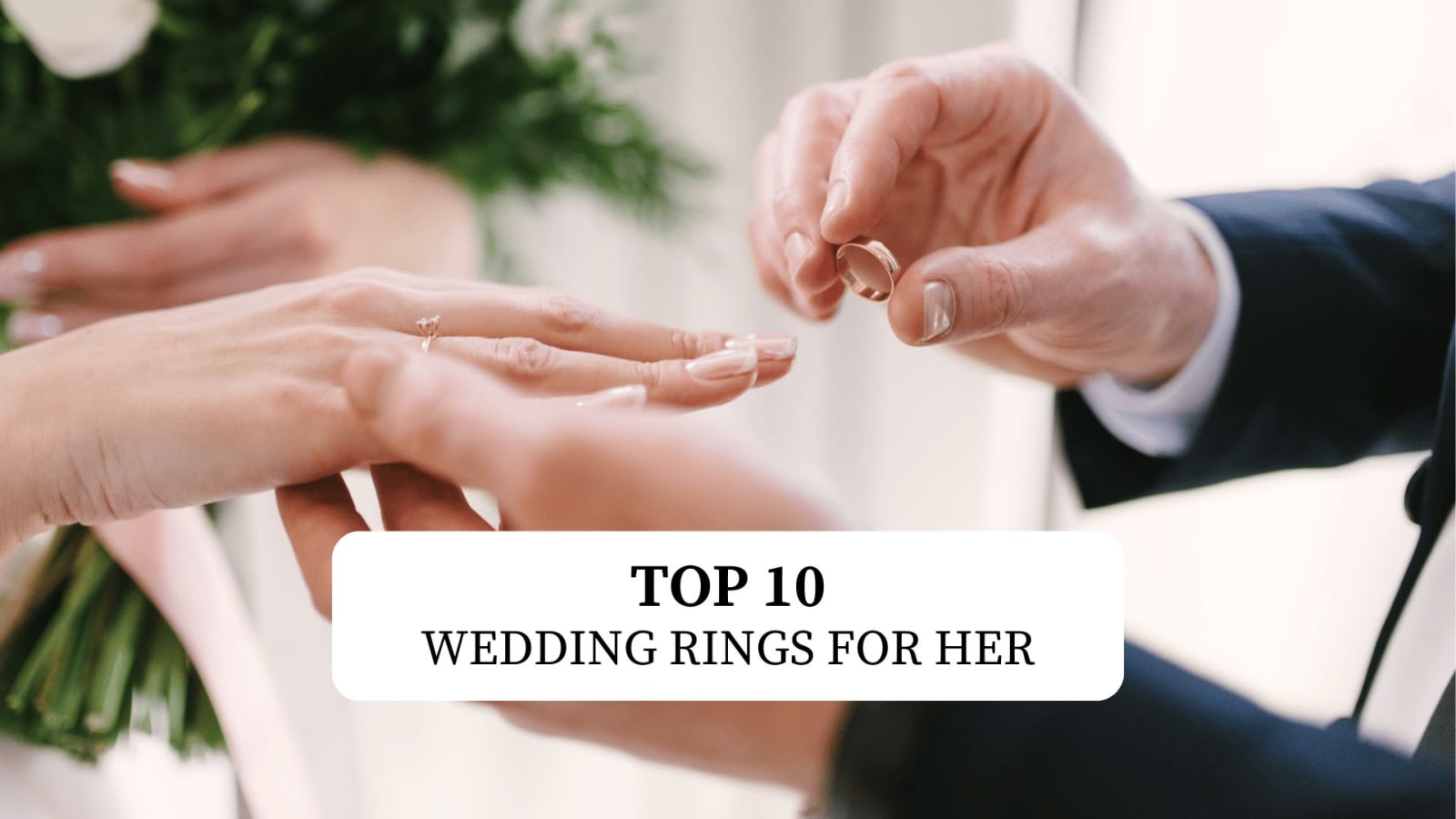
Top 10 Wedding Rings for Her: Styles She'll Wear Every Day Forever
A wedding ring is the only piece of jewellery she'll wear every day for the rest of her life — through work, holidays, washing up, and every ordinary Tuesday in between. It has to be beautiful on the day and still perfect in thirty years.
Here are the ten ring styles brides love most right now, what each one says, and the practical advice that helps you choose the right one.
1. Boho Cluster
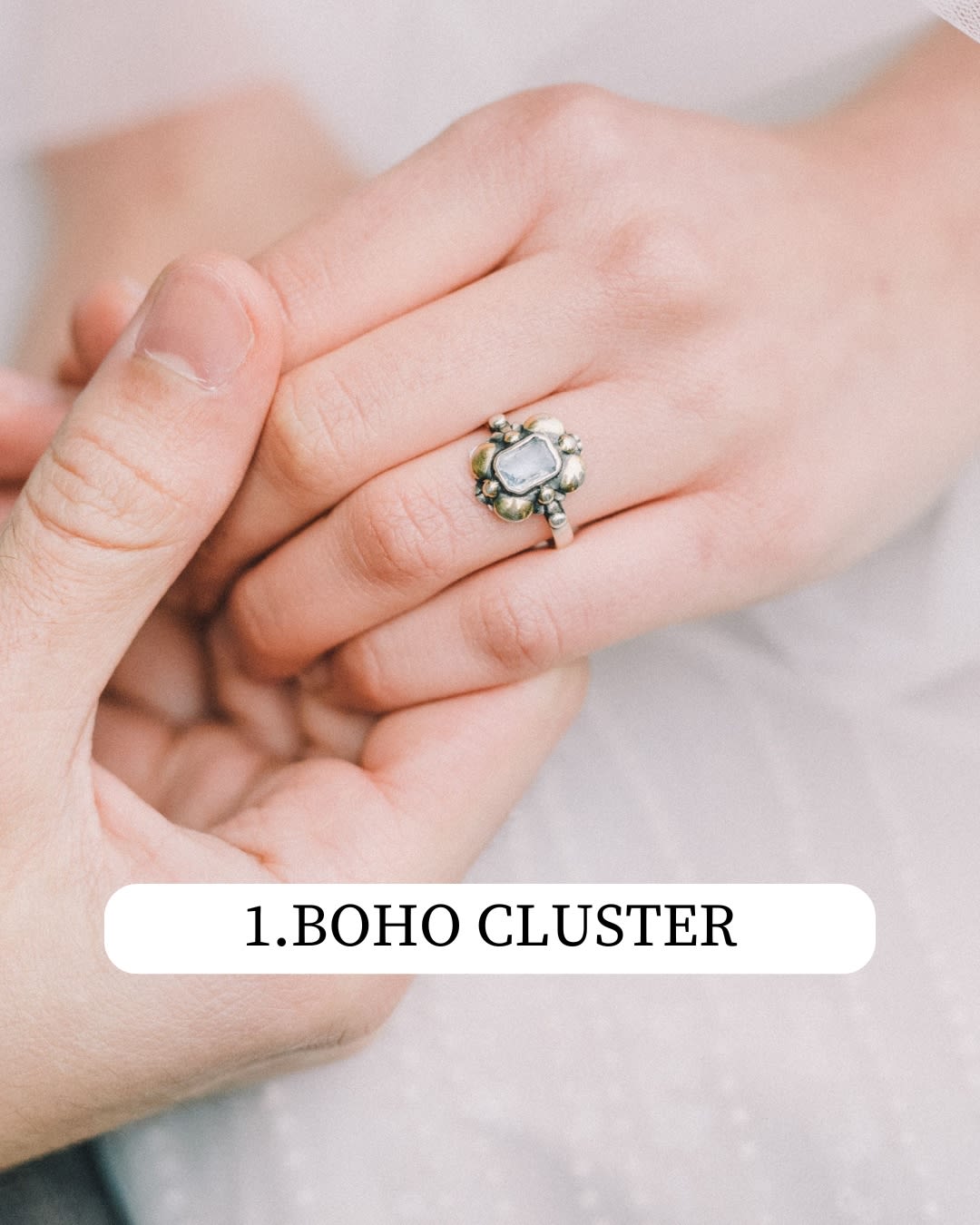
Organic, handcrafted, and completely one of a kind. A raw or rose-cut stone in a mixed-metal setting looks like an heirloom you inherited rather than something you bought — perfect for the bride who has never wanted anything conventional.
Best for: free-spirited and artistic brides, vintage lovers, alternative weddings.
2. Diamond Halo
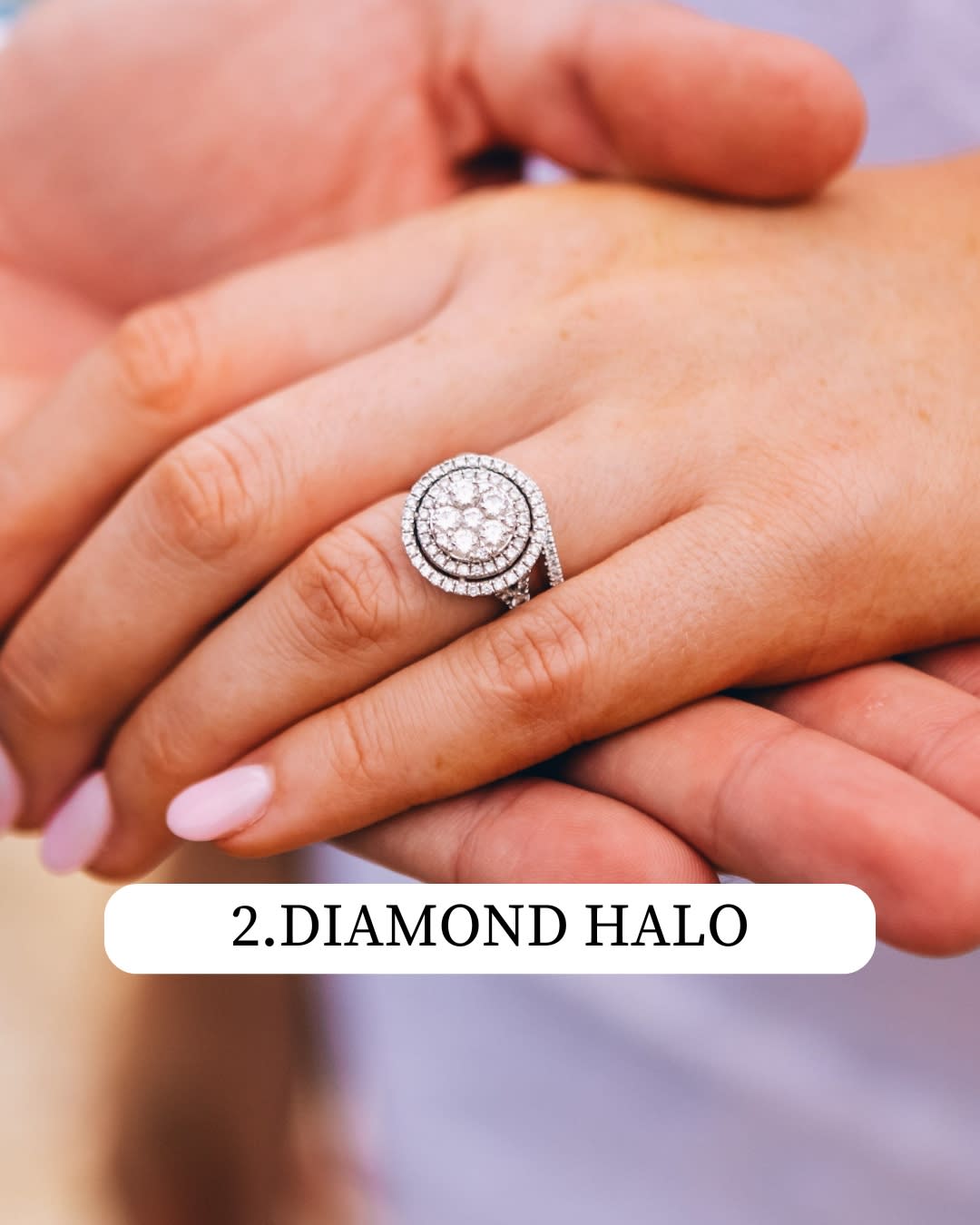
The maximum-sparkle choice. A halo of small diamonds wraps the centre stone and makes it look significantly larger — meaning you get serious presence on the finger without a serious jump in budget.
Best for: brides who love glamour, anyone wanting the biggest visual impact per euro.
3. Marquise Stack
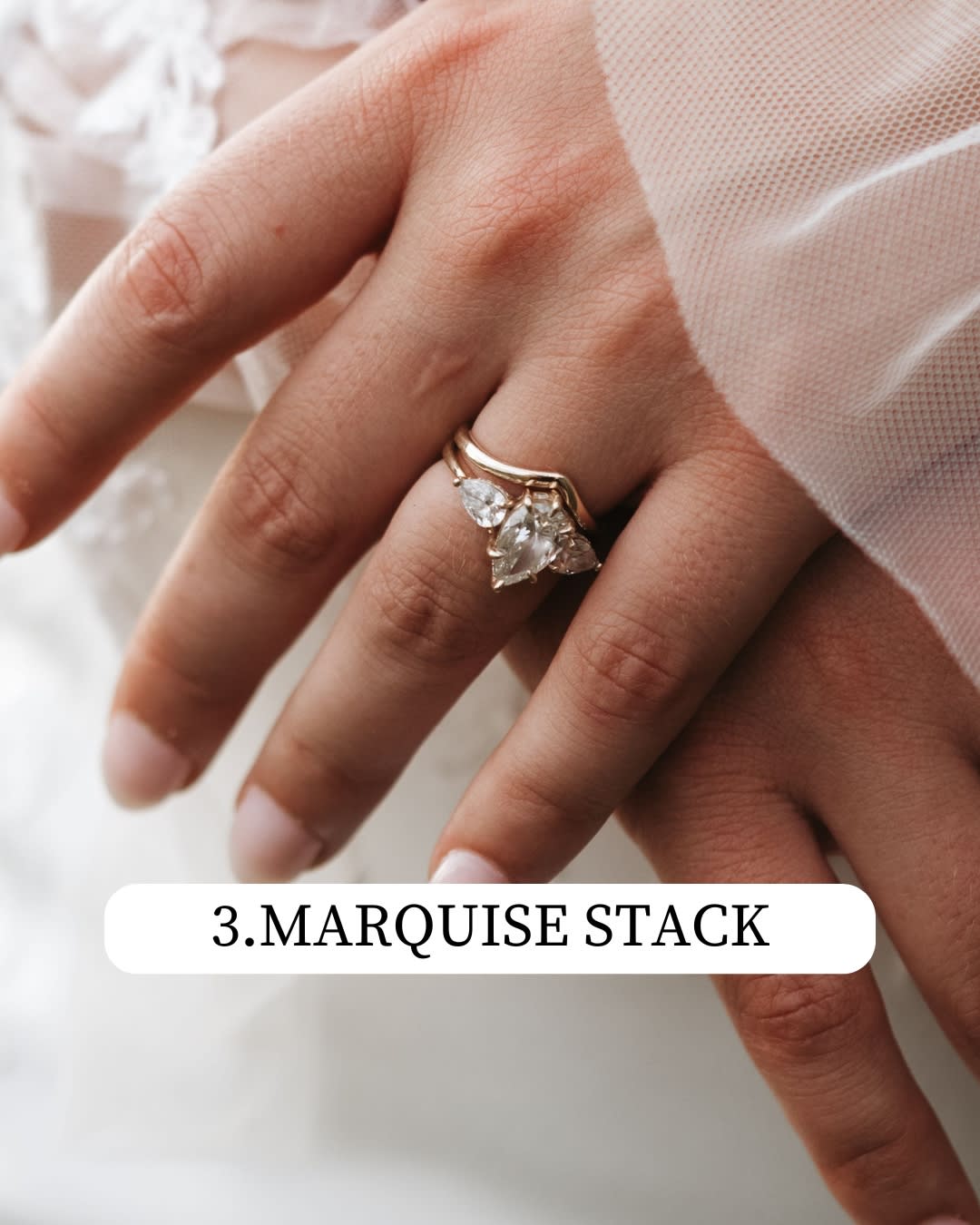
Pear and marquise stones arranged in a soft cluster, nested with a curved band. Elongated cuts flatter the finger beautifully, and the contoured wedding band means the two rings sit flush with no awkward gap.
Best for: modern brides, stacking lovers, anyone who wants an unusual silhouette.
4. Teal Vine
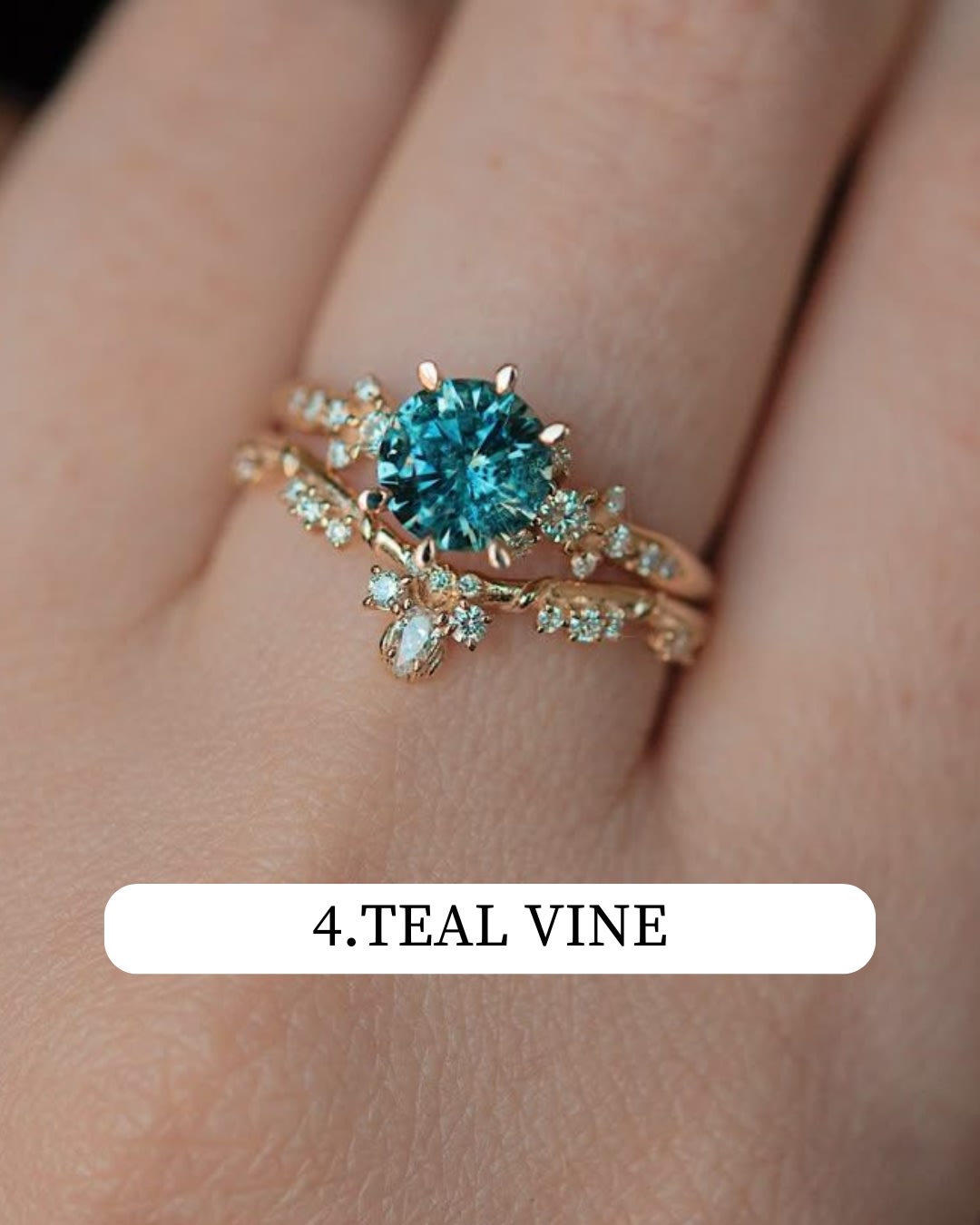
A teal sapphire on a delicate vine of diamonds — nature-inspired and genuinely rare. Sapphires rate 9 on the Mohs hardness scale, making them one of the very few coloured stones tough enough for everyday wear.
Best for: outdoor and woodland weddings, colour-loving brides, "something blue" believers.
5. Sapphire Stack
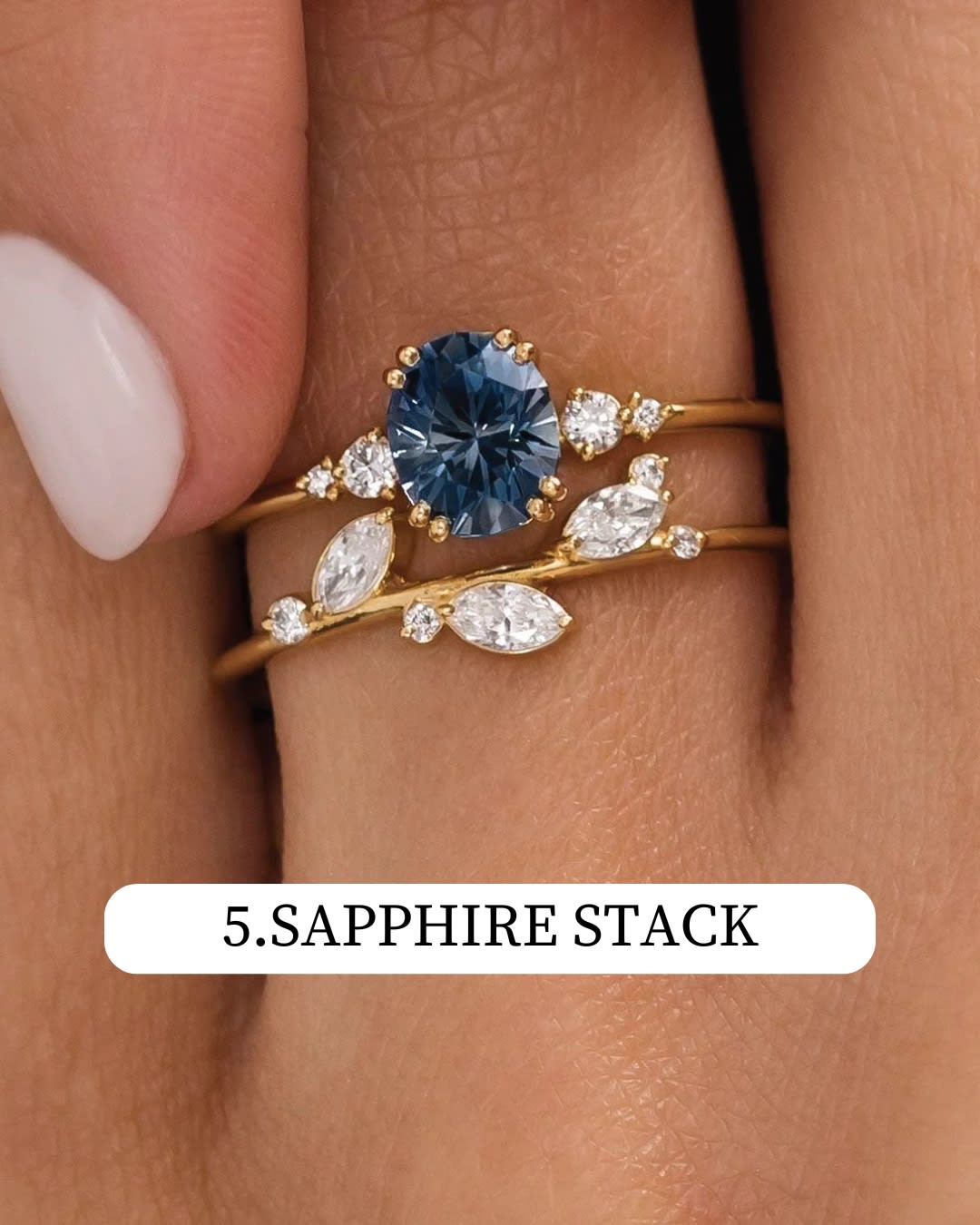
Deep blue against warm yellow gold, paired with a marquise leaf band. It's the royal choice (Princess Diana's ring made blue sapphires iconic) and it stands out in every photo where a diamond might disappear.
Best for: brides who want colour with tradition, gold-tone lovers, stackers.
6. Oval Solitaire
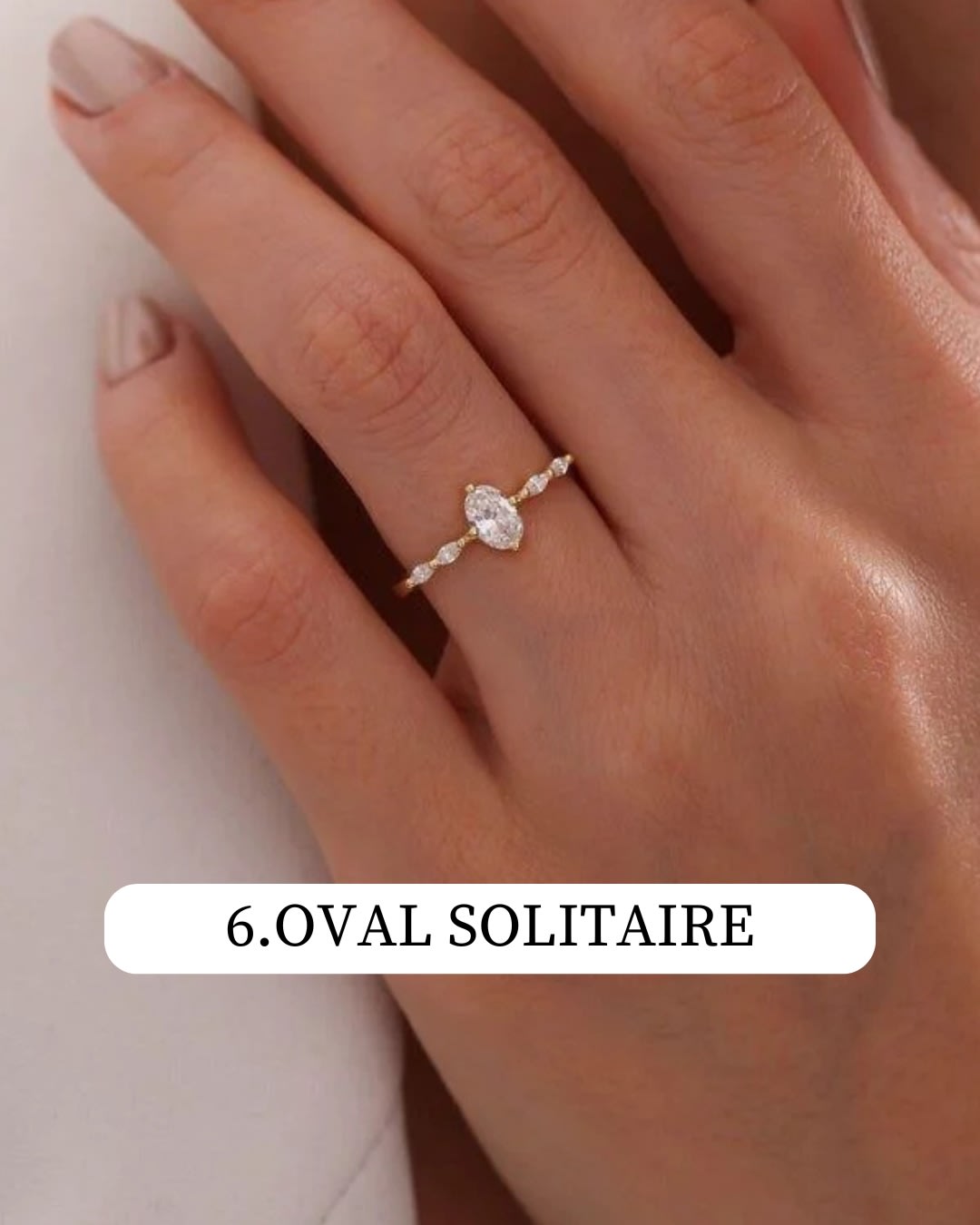
Delicate, elegant, and quietly clever: an oval cut looks larger than a round diamond of the same carat weight and visually lengthens the finger. Tiny accent stones on the band add sparkle without bulk.
Best for: minimalist brides, everyday wearers, anyone with an active lifestyle.
7. Bold Statement
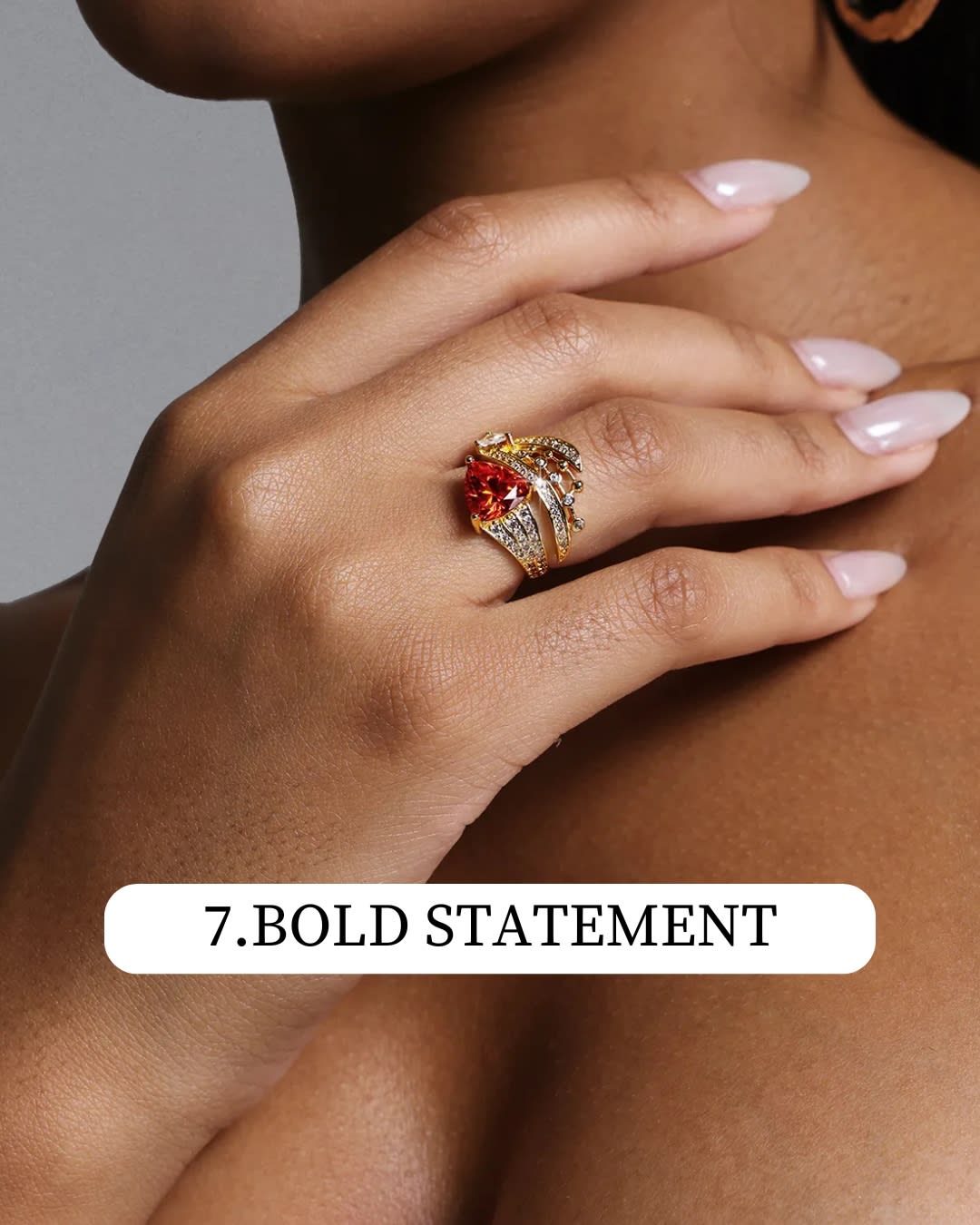
A vivid coloured centre stone in a sculptural gold setting — a ring that starts conversations. If tradition has never been your thing, a red, emerald, or amethyst centre stone makes the ring unmistakably yours.
Best for: confident brides, non-traditional couples, second marriages and vow renewals.
8. Leaf Crown
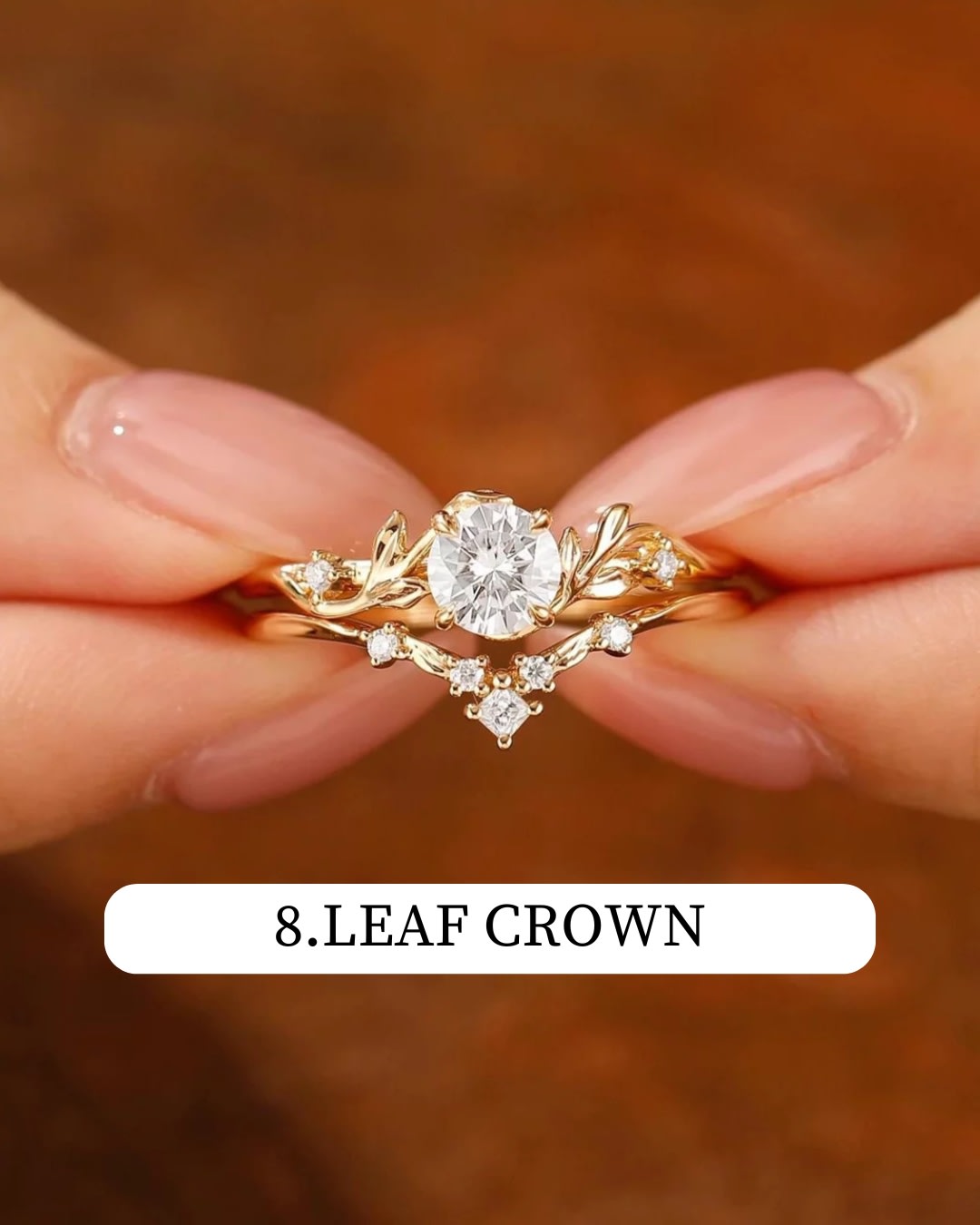
Gold leaves curling around a round diamond, finished with a chevron band that nests underneath. Nature-inspired detailing gives a classic stone real character, and the V-shaped band solves the gap problem beautifully.
Best for: garden and forest weddings, romantics, lovers of fine detail.
9. Classic Solitaire
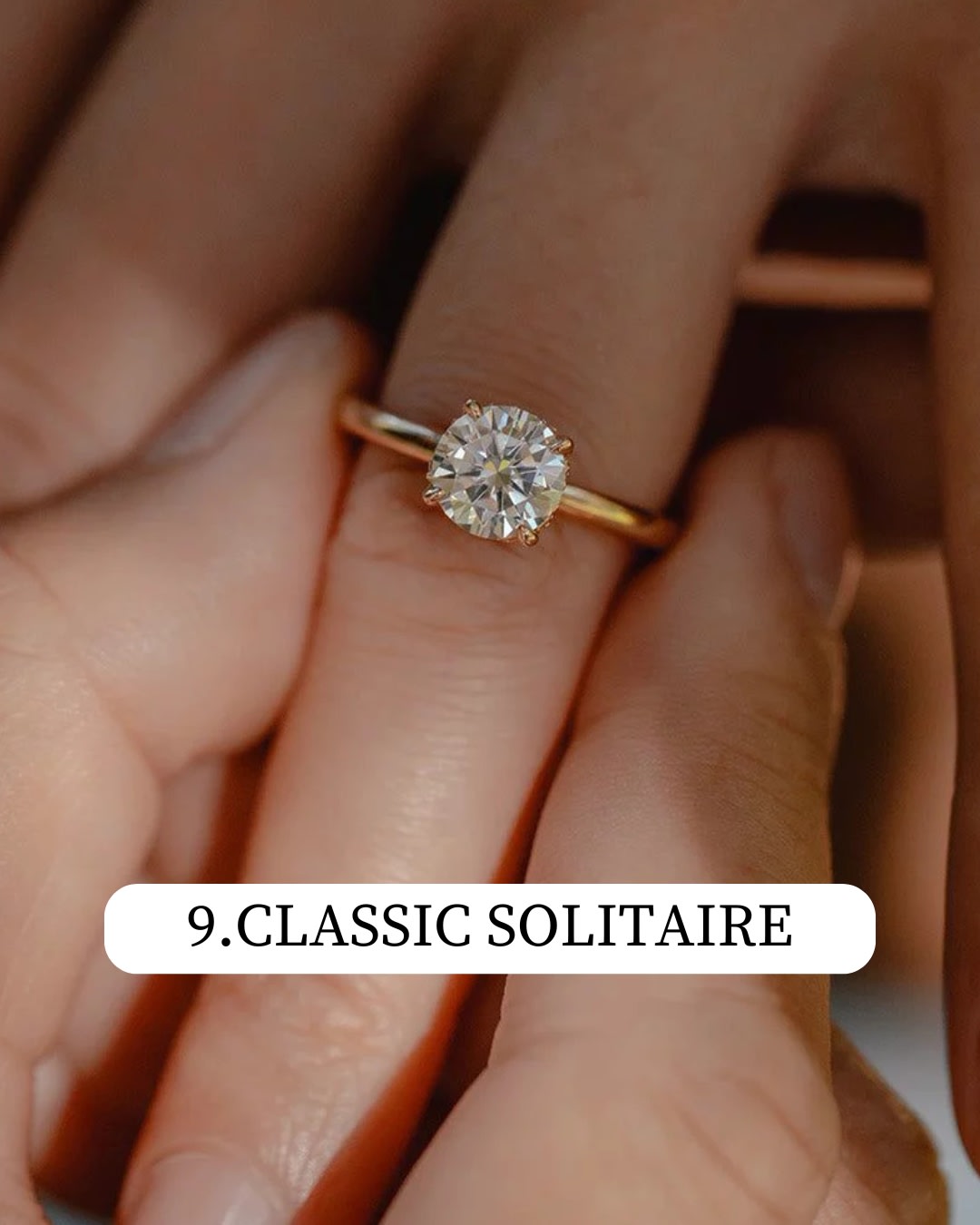
The ring that has never gone out of style and never will. One brilliant stone, six prongs, nothing else — it works with every wedding band, suits every hand, and looks exactly as right in 2027 as it did in 1957.
Best for: traditional brides, timeless taste, anyone who wants zero regrets in twenty years.
10. Diamond Pavé
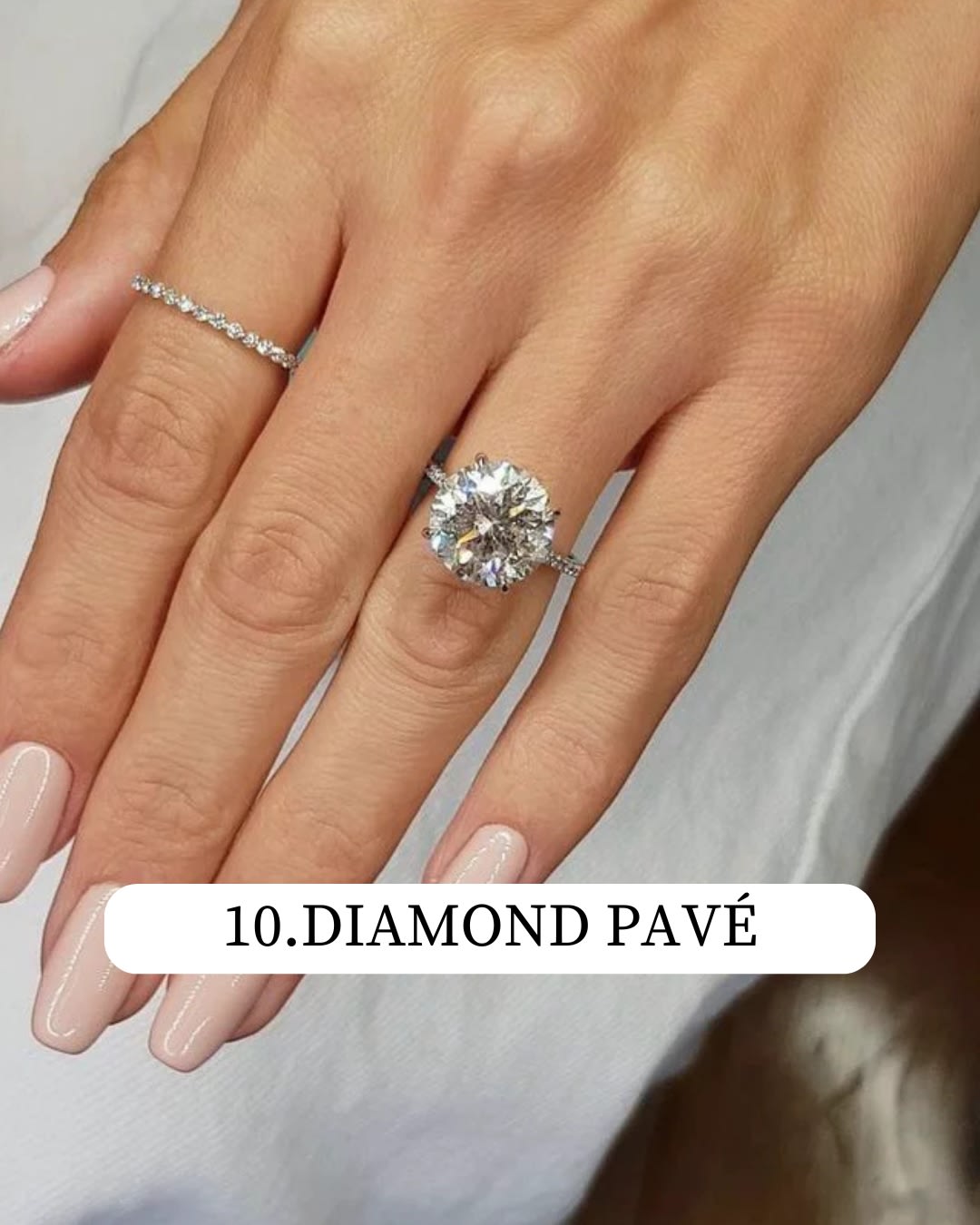
A statement centre stone on a pavé-set band, worn with a matching eternity ring. This is full-glamour bridal jewellery — the band's tiny diamonds catch light from every angle and make the whole hand sparkle.
Best for: glamorous brides, milestone anniversaries, those who love a complete bridal set.
How to Choose the Right Ring for Her
Watch her hands, not just her Pinterest. Does she wear gold or silver tones every day? Delicate chains or bold pieces? Her existing jewellery is the most honest style guide you'll find.
Match the setting to her life. A high-set solitaire snags on gloves, hair, and hospital work; low-profile bezel or pavé settings suit hands-on jobs, sports, and small children far better.
Understand where the money goes. Cut matters more than carat for sparkle. Dropping slightly below a round carat weight (0.9 rather than 1.0) can save meaningfully with no visible difference, and lab-grown diamonds offer identical looks for a fraction of the price.
Consider coloured stones carefully. Sapphires and rubies (Mohs 9) are hard enough for daily wear; emeralds, opals, and moonstones are softer and need gentler treatment.
Plan the band from the start. Curved and chevron bands nest against irregular settings; a plain band may leave a gap. Buying as a set avoids compromises later.
Get the size right. Fingers swell in heat and shrink in cold — size in the afternoon, at room temperature, and remember wide bands fit tighter than thin ones.
Insure it and clean it. Add the ring to your home insurance, and check prongs annually. Warm water and a soft brush restores more sparkle than most people expect.
Ready for the Next Step?
The ring is the beginning. Then comes the date, the venue, the dress — and the moment you tell everyone you love that it's happening.
FAQ
What is the most popular wedding ring style for her? The classic solitaire remains number one worldwide, with halo and oval settings close behind. Coloured stones — especially sapphires — are the fastest-growing choice.
How much should you spend on an engagement ring? The old "three months' salary" rule was marketing, not tradition. Spend what fits your finances comfortably; lab-grown diamonds and coloured stones deliver stunning rings at far lower prices.
What ring style looks biggest for the money? A halo setting or an elongated cut (oval, marquise, pear) both look noticeably larger than their carat weight suggests.
Are lab-grown diamonds real diamonds? Yes — chemically and optically identical to mined diamonds, typically 50–70% less expensive, and increasingly popular with couples.
How do I find her ring size without asking? Borrow a ring she wears on the same finger and have a jeweller measure it, or ask her closest friend. Most rings can be resized afterwards, though eternity bands often cannot.